
Scotland’s October school break survives in a calendar that has largely forgotten the work which helped shape it. For generations, tens of thousands of children left classrooms each autumn to lift potatoes by hand, sometimes for weeks at a time. Government records show more than 60,000 were employed during the busiest post-war seasons before mechanisation gradually made the schoolchild labour force unnecessary.
The October holidays are beginning across Scotland, and at the National Museum of Rural Life children will spend part of the break learning how an earlier generation spent theirs.
They went to work.
From the early twentieth century through the post-war decades, schoolchildren formed a significant part of Scotland’s seasonal potato-harvesting labour force. Classes were rearranged or suspended, children travelled from towns and cities into farming districts, and entire school calendars adjusted themselves to the period when the tattie crop had to come out of the ground.
The practice has largely disappeared.
The holiday did not.
Tattie Howking Was Labour, Not a Harvest Festival
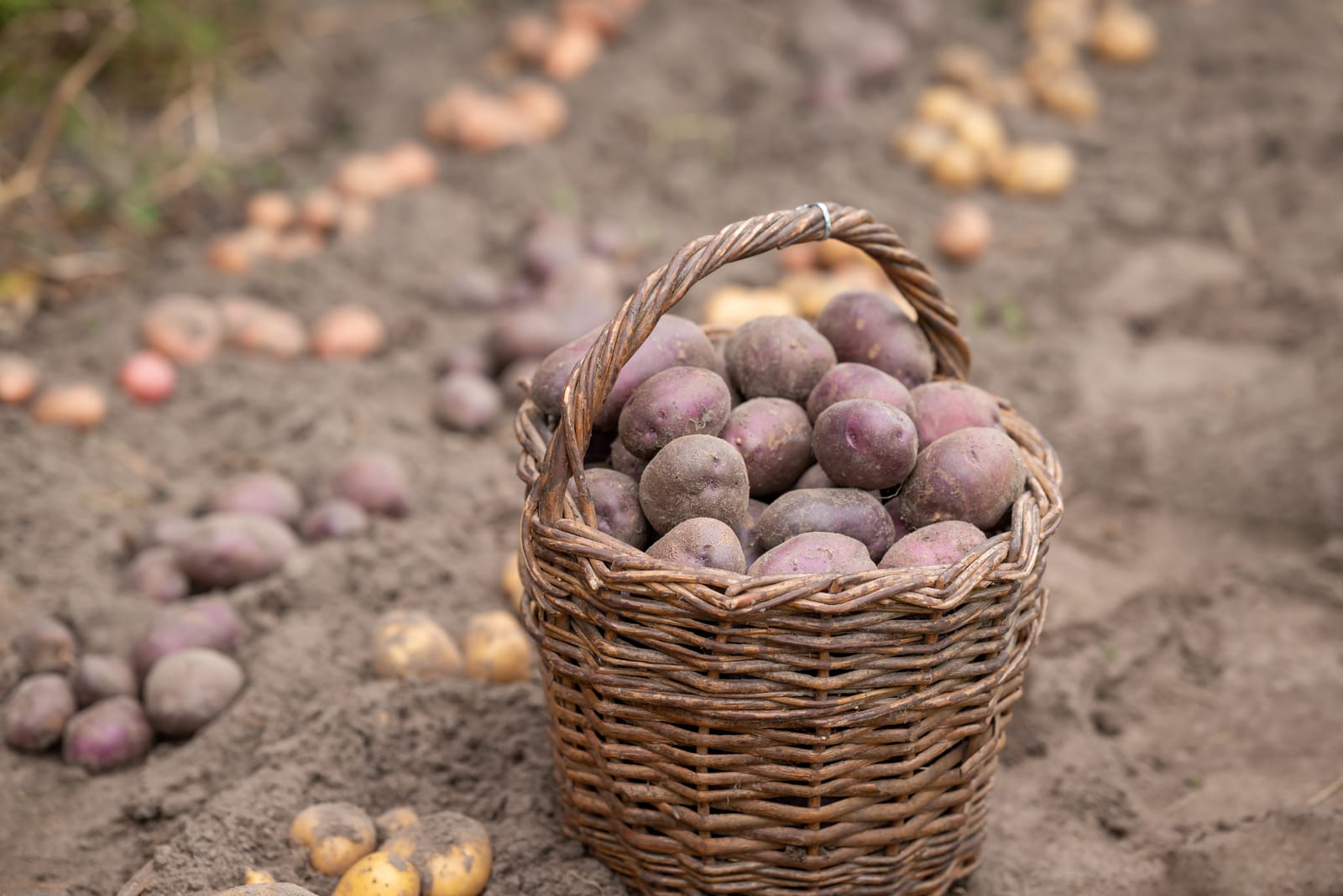
Before mechanical harvesters became widespread, potatoes were lifted from the soil and gathered largely by hand.
Children worked in squads moving across fields behind the implements that exposed the crop.
The potatoes were collected into baskets or “sculls”, sorted and gathered for transport.
Work could be cold, muddy and repetitive. Autumn weather determined whether a field could be worked at all, so farmers needed large numbers of people who could be deployed quickly when conditions allowed.
Schoolchildren became part of that labour supply.
The arrangement was particularly important in major potato-growing areas including Angus, Fife, Perthshire, Aberdeenshire, Moray and parts of the Lothians, although children were also transported out from cities.
Post-War Scotland Still Needed Tens of Thousands of Children
The dependence became especially visible after the Second World War.
During the war, agriculture had drawn upon the Women’s Land Army, prisoners of war and other organised labour.
Once those sources diminished, the potato harvest still had to be gathered.
The National Library of Scotland’s surviving government films and records show how actively officials promoted the recruitment of schoolchildren.
The Education (Scotland) Act 1946 restricted the seasonal employment of children under 13, pushing recruitment increasingly towards older pupils.
By 1948, official figures recorded 63,300 Scottish schoolchildren employed in the potato harvest.
In 1949 the number was 61,800.
There were 52,300 in 1950, around 50,000 in 1951, 43,300 in 1952 and 42,100 in 1953.
These were not marginal numbers. In the peak post-war years, the seasonal schoolchild workforce was comparable in size to the population of a substantial Scottish town.
Some Children Lost Weeks of School
Government and parliamentary records repeatedly returned to the educational cost.
A Commons debate in 1950 recorded expectations that between 50,000 and 55,000 Scottish children would be involved in that year’s harvest.
The average age was reported as around 14.
More than a quarter were expected to lose no classroom time because school holidays had been organised around the work. Others could lose anything from a few days to approximately three weeks, with a normal upper limit of around 80 hours of school time.
The geography was uneven.
In 1956, parliamentary figures recorded 5,585 children from Fife schools employed in potato lifting, equivalent to 35 per cent of the relevant school population recorded in the return. Their average absence was 12 days.
In Angus, 1,262 children were employed, representing 40.5 per cent, with an average of five days.
Moray and Nairn recorded 1,143 children, around 48 per cent of the group covered by the statistics.
Dundee recorded 3,098 children — 42 per cent — with an average absence of 15 days.
Individual Dundee schools commonly lost pupils for around three weeks.
Glasgow Children Were Sent Into the Countryside
The harvest was not only a rural childhood experience.
Children were recruited from Glasgow and other urban areas and sent to farming districts.
National Library of Scotland research into the post-war publicity campaign records conditions offered to Glasgow recruits in 1947.
The minimum rate was one shilling an hour.
Children staying in hostels were guaranteed 25 shillings a week, but 16 shillings could be deducted for food and accommodation.
Teachers were sometimes drawn into the operation as supervisors, looking after groups away from home for periods that could extend across several weeks.
Government publicity films, cinema material, press advertising and radio announcements encouraged participation.
Scotland was not simply tolerating children working in an agricultural emergency. The state was helping organise and promote the labour supply.
The Practice Also Reflected Class
The children who went howking were not drawn evenly from Scottish society.
Parliamentary debate during the 1950s recorded concern that pupils from poorer households and junior secondary schools were disproportionately represented.
For some families, the wages were useful household income.
For some children, the harvest was remembered positively: outdoor work, friendships, money of their own and a temporary escape from school.
For others it meant long days of physical labour, cold accommodation and lost education.
Both experiences can exist within the same historical system.
Machines Ended the Need Faster Than Education Policy Did
The numbers began falling sharply as agriculture mechanised.
Parliament was told that around 41,500 children were still being used in the 1956 harvest when those working entirely within scheduled holidays were included.
By 1957 the number had fallen to roughly 22,000.
In 1958 it was about 16,000.
By 1959 the figure was approximately 10,800.
The decline was increasingly attributed to mechanised harvesting and changes in agricultural organisation rather than to a sudden disappearance of the potato crop.
Machines could perform work that had once required entire squads moving slowly behind a tractor.
The economic reason for taking thousands of pupils out of school weakened accordingly.
The Work Survived After the Great Post-War Decline
The collapse in the national numbers did not mean tattie howking disappeared overnight.
National Museums Scotland records children continuing to take part in potato harvesting into the later twentieth century, with memories extending into the 1980s.
By then the scale and organisation were very different from the state-supported post-war labour system.
The calendar, however, had already absorbed the harvest.
School holidays arranged around agricultural necessity became ordinary October holidays even as fewer children had any direct connection with a potato field.
The survival of the break is therefore a small piece of institutional archaeology. A modern family can spend an October week travelling, staying home or visiting a museum because the school year still carries the outline of a vanished rural labour requirement.
At the National Museum of Rural Life between 13 and 16 October, the old work will return as history rather than employment.
Children who once would have been counted among tens of thousands of seasonal agricultural workers can now encounter the tools, techniques and stories of tattie howking during a holiday whose timing outlived the job that helped create it.
Sources
Dig in for Family Fun at the National Museum of Rural Life This Half Term
National Museums Scotland, 6 October 2026
https://media.nms.ac.uk/news/dig-in-for-family-fun-at-the-national-museum-of-rural-life-this-half-term
Autumn Harvest in Eight Rural Snapshots
National Museums Scotland
https://www.nms.ac.uk/discover-catalogue/autumn-harvest-in-8-rural-snapshots
Politics, Publicity and Potatoes: Scotland’s Tattie Howkin’ Films
National Library of Scotland, accessed October 2026
https://blog.nls.uk/politics-publicity-and-potatoes-scotlands-tattie-howkin-films/
School Children — Potato Harvest
UK Parliament, 2 November 1954
https://hansard.parliament.uk/commons/1954-11-02/debates/fcfac456-a656-48ae-9346-e3fdc90904c5/WrittenAnswers
Scotland — Potato Harvest and Schoolchildren
UK Parliament, 9 May 1950
https://hansard.parliament.uk/Commons/1950-05-09/debates/af4fff13-efd6-47d7-8895-ca688266a8fe/Scotland
Potato Harvest (School Children)
UK Parliament, 20 November 1956
https://hansard.parliament.uk/commons/1956-11-20/debates/a4d6d2ac-9cbe-484a-a6e1-fdb89bae6a9d/PotatoHarvest%28SchoolChildren%29
Commons Chamber — Potato Harvest
UK Parliament, 11 November 1959
https://hansard.parliament.uk/commons/1959-11-11/debates/c1ebe3a4-d467-4294-9929-5a6b324ff0ed/CommonsChamber