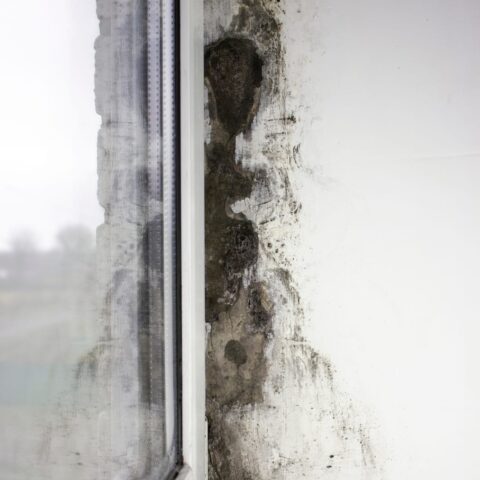


From 6 October 2026, social and private landlords across much of Scotland’s rented housing sector must investigate reports of damp and mould within fixed statutory timescales, issue written findings and begin necessary repairs quickly. Cases reported before that date do not receive the new Awaab’s Law deadlines.
New statutory repair rules for damp and mould come into force across Scotland on 6 October 2026, creating a defined timetable for landlords to investigate problems, tell tenants what they have found and begin work where substantial damp or mould is identified.
The change is being introduced through the Investigation and Commencement of Repair (Scotland) Regulations 2026 and is commonly referred to as Awaab’s Law, after two-year-old Awaab Ishak, who died in England following prolonged exposure to mould in his family’s housing-association home.
In Scotland, the regulations amend existing housing law rather than creating a completely separate repair system. They add damp and mould duties to the Repairing Standard governing most private rented homes and alter the Right to Repair arrangements applying to Scottish secure and short Scottish secure tenancies.
The result is a new statutory clock around one of the most persistent forms of housing disrepair.
The Clock Starts When the Landlord Becomes Aware
The first deadline is ten working days.
Once a landlord has been notified, or otherwise becomes aware, that a home may be affected by damp or mould, an investigation must be completed within ten working days. The investigation must be carried out by a competent person able to determine whether the property is substantially free from damp and mould and whether repairs are required.
The law does not require the investigator to hold a particular named qualification. Scottish Government guidance instead places responsibility on the landlord to use someone with the skills and experience necessary to make the assessment. Depending on the property and the suspected cause, that may require specialist assistance.
The obligation also does not depend solely on the tenant making a formal complaint. The statutory wording covers circumstances in which the landlord “otherwise becomes aware” that damp or mould may be present.
That could occur through an inspection, repair visit or information received from another source. Once awareness has been established, the statutory timetable begins.
A Written Record Is Now Required
The investigation is followed by a second deadline.
Within three working days after the investigation has been completed, the landlord must give the tenant a written summary of the findings.
Scottish Government guidance says the document should identify who carried out the investigation, what was examined and what was found. It should state whether the home is substantially free from damp and mould and, where work is required, explain the action that will be taken and the expected timescale.
This introduces a documentary stage into disputes that have often depended heavily on telephone calls, visits and competing recollections of what was said. The investigation and the landlord’s conclusions should now produce a written record capable of being examined later if the tenant disputes the decision or the repair process fails.
Repairs Must Begin Within Five Working Days
If the investigation finds substantial damp or mould requiring work, the landlord must ensure that repairs begin within five working days after the investigation has concluded.
The duty goes further than simply removing visible mould.
The regulations require the work to leave the home substantially free from damp and mould and, so far as reasonably practicable, to keep it substantially free from the problem. Scottish Government guidance makes clear that cleaning mould without addressing its underlying cause will not necessarily be enough.
The source may be penetrating damp, rising damp, defective plumbing, inadequate ventilation, insulation problems, heating conditions, water ingress or another building defect. The legal duty concerns the condition of the home rather than the cosmetic appearance of the affected surface.
If the problem recurs or appears in a new location, the guidance says a further investigation may be required and the statutory timetable can begin again.
Social and Private Tenants Do Not Get Identical Completion Rights
The law creates an important difference after work has begun.
For social landlords, qualifying damp and mould repairs fall within the Right to Repair system and must normally be completed within a maximum period of 20 working days.
Private landlords do not have the same fixed 20-working-day completion period.
They must still investigate within ten working days, issue the written summary within three and begin necessary work within five. Once work has started, however, the underlying Repairing Standard continues to require completion within a reasonable period rather than imposing the same statutory 20-day maximum used for social housing.
The Scottish Government’s tenant guidance describes this as completing the work as soon as reasonably practicable.
That difference is likely to be significant in practice. Two tenants with apparently similar damp problems may therefore have identical investigation and commencement deadlines but different legal routes governing the eventual completion of the work.
What Counts as “Substantial” Damp or Mould
The regulations do not simply impose the accelerated repair process whenever a small patch of condensation or mould is found.
The statutory test concerns whether a home is “substantially free from damp and mould”. The Scottish Government guidance deliberately avoids reducing that test to a single measurement.
Investigators are directed to consider the extent and persistence of the problem, whether it affects several areas or rooms, whether hidden moisture or mould may be present, the likelihood that it will recur and whether someone living in the property may be particularly vulnerable to its effects.
The same physical patch can therefore carry a different level of concern depending on the surrounding circumstances.
Guidance points to existing tolerable-standard measurements as one possible reference point. Persistent visible penetrating damp covering more than roughly 10 per cent of the wall or ceiling area in certain rooms can indicate that a property has fallen below existing standards, while larger proportions can apply elsewhere in the home. Those figures are guidance rather than an automatic Awaab’s Law threshold.
The assessment remains one for the competent person examining the individual property.
The Tenant’s Health Can Form Part of the Assessment
The Scottish guidance also expressly recognises that damp and mould do not affect every occupant in the same way.
Age and health can form part of the assessment of severity. A landlord may ask whether somebody in the household has circumstances that make exposure more hazardous, although tenants are not required to disclose personal medical information and the guidance says landlords should not demand evidence of a health condition.
This means the investigation is not confined to measuring the size of a mould patch. It can include the duration of exposure, the likelihood of recurrence and the vulnerability of the people living in the property.
There Is an Exception — but It Is Not an Open-Ended One
The statutory deadlines can be interrupted where circumstances beyond the landlord’s control prevent compliance.
The regulations expressly allow for such circumstances during both the investigation period and the period for beginning repair work.
Scottish Government guidance gives examples including difficulty obtaining contractors and complex structural work.
That does not simply cancel the landlord’s responsibilities. In the private rented sector, where the landlord cannot meet the statutory period for reasons beyond their control, the legislation requires the tenant to be told in writing why the deadline cannot be met and given a reasonable alternative timetable. Reasonable steps must also be taken, where practicable, to minimise the damp or mould while the full requirement cannot yet be completed.
The social-housing Right to Repair provisions similarly allow the relevant periods to be suspended where circumstances beyond the landlord’s control prevent the investigation or commencement of the qualifying repair.
The practical importance of those provisions will become clearer as cases move through landlord complaints systems, the Scottish Housing Regulator and the First-tier Tribunal.
6 October Creates a Legal Cut-Off
The commencement arrangements create one of the less obvious consequences of the reform.
The Scottish Government’s tenant guidance states that cases reported before 6 October 2026 are not subject to the new Awaab’s Law timeframes.
A tenant whose damp or mould problem was reported on 5 October therefore does not automatically acquire the new ten-, three- and five-working-day timetable simply because the problem remains unresolved after the regulations come into force.
A comparable report made on or after 6 October can fall within the new system if the tenancy and circumstances are covered.
Existing landlord duties do not disappear for earlier reports. Social and private landlords already have statutory repair and housing-condition obligations. What the older case does not acquire is the new timetable created by the 2026 regulations.
That makes the date on which a landlord first became aware of the problem potentially important evidence in any later dispute.
The Rules Cover Most Rented Homes, but Not Every Housing Arrangement
The regulations apply to accommodation covered by the Right to Repair Scheme or the Repairing Standard.
The Right to Repair Scheme applies to Scottish secure tenancies and short Scottish secure tenancies. The Repairing Standard covers most private rented houses, including the private residential tenancy that now accounts for much of the private rented sector.
Some occupancy arrangements fall outside those definitions.
Mobile homes are not treated as houses under the Repairing Standard. Publicly provided Gypsy/Traveller sites can also fall outside the statutory Awaab’s Law provisions, although the Scottish Government has introduced similar expectations through updated Minimum Site Standards guidance. Those standards use the same ten-working-day investigation, three-working-day written report and five-working-day repair commencement framework.
Temporary accommodation is more complicated. The regulations apply where the temporary accommodation itself falls within either the Right to Repair Scheme or the Repairing Standard. Other forms of temporary accommodation are outside the statutory Awaab’s Law duties, although the Government says social landlords should apply the same approach more widely as best practice.
Enforcement Depends on the Type of Landlord
Social tenants and private tenants also have different enforcement routes.
For social housing, the amended Right to Repair regime contains a compensation mechanism where the landlord fails to meet the new investigation or repair-commencement deadlines and no permitted suspension applies.
The regulations provide for an initial payment of £15, followed by £3 for each additional working day of delay, subject to a maximum of £100 for the relevant failure. Separate compensation provisions can apply to failure to investigate and failure to commence the qualifying repair.
Private tenants can take unresolved Repairing Standard disputes to the First-tier Tribunal for Scotland’s Housing and Property Chamber.
The tribunal can determine whether the landlord has complied with the Repairing Standard and can issue a repairing standard enforcement order requiring work to be carried out. Existing enforcement law also allows consequences where such an order is ignored.
The 2026 regulations specifically require the tribunal, when considering compliance with the Repairing Standard, to take the new damp and mould investigation and repair duties into account.
The Law Arrives During a Wider Housing Strain
Awaab’s Law begins against a housing system already carrying unusually heavy pressure.
Official homelessness figures published in September record 41,443 homelessness applications during 2025–26. At 31 March 2026, 34,964 homelessness cases remained open, 10 per cent more than a year earlier. The number of households in temporary accommodation had risen to 19,004, including 10,715 children.
Those figures concern homelessness rather than damp and mould, but they describe the housing environment in which the new repair duties will operate. A landlord’s ability to move a household temporarily while major structural work is undertaken cannot be considered entirely separately from pressure on alternative accommodation.
Modern Scot has also documented other parts of Scotland’s housing-condition problem during 2026. In September, government figures showed 219 publicly funded cladding assessments under way but only 16 completed, with 22 buildings operating under urgent interim safety measures. That programme concerns external-wall fire safety rather than damp, but it demonstrates another area in which housing condition, investigation, remediation and the time between identification and completed work have become significant public-policy issues.
The publication has separately examined Scotland’s large stock of long-term empty homes and the absence of a Scottish equivalent to England’s Empty Dwelling Management Order system. The new damp and mould regulations approach housing condition from the opposite direction: instead of dealing with homes standing unused, they impose additional duties on landlords responsible for occupied rented homes.
Damp and Mould Are Only the First Stage
The policy note accompanying the regulations describes damp and mould as the starting point rather than the end of the programme.
The Scottish Government has said that other qualifying housing hazards are intended to be brought within similar arrangements over time.
The regulations taking effect on 6 October therefore establish more than a damp-removal timetable. They create the first Scottish statutory model under which specified housing hazards are tied to prescribed investigation and repair deadlines across both social and private renting.
The immediate test will be administrative and practical: whether landlords identify cases consistently, whether tenants receive the required written findings, how frequently exceptional-circumstances provisions are used, and how disputes over the meaning of “substantial” damp or mould are resolved.
The first cases arising from reports made on or after 6 October will begin to show how firmly those deadlines operate outside the text of the regulations.
Sources
Awaab’s Law: Guidance for Landlords in Scotland
Scottish Government, 4 September 2026; updated 9 September 2026
https://www.gov.scot/publications/awaabs-law-guidance-landlords-scotland/
Awaab’s Law: Guidance for Tenants in Scotland
Scottish Government, 4 September 2026
https://www.gov.scot/publications/awaabs-law-guidance-tenants-scotland/
The Investigation and Commencement of Repair (Scotland) Regulations 2026
UK Legislation, 2026
https://www.legislation.gov.uk/sdsi/2026/9780111065594/contents
Housing (Scotland) Act 2006 — Section 14: Landlord’s Duty to Repair and Maintain
UK Legislation, current version
https://www.legislation.gov.uk/asp/2006/1/section/14
Housing (Scotland) Act 2025
UK Legislation, 2025
https://www.legislation.gov.uk/asp/2025/13/enacted
Housing Standards — Private Renting
Scottish Government, accessed 5 October 2026
https://www.gov.scot/policies/private-renting/housing-standards/
Homelessness in Scotland: 2025–26
Scottish Government, 22 September 2026
https://www.gov.scot/publications/homelessness-in-scotland-2025-26/
Scotland Has 219 Cladding Assessments Under Way: Only 16 Are Complete
Modern Scot, 17 September 2026
https://modernscot.ch/scotland-has-219-cladding-assessments-under-way-only-16-are-complete/
Scotland Has No Compulsory Sale Order and England’s Six-Month Empty-Home Reform Does Not Apply Here
Modern Scot, 28 September 2026
https://modernscot.ch/scotland-has-no-compulsory-sale-order-and-englands-six-month-empty-home-reform-does-not-apply-here/